

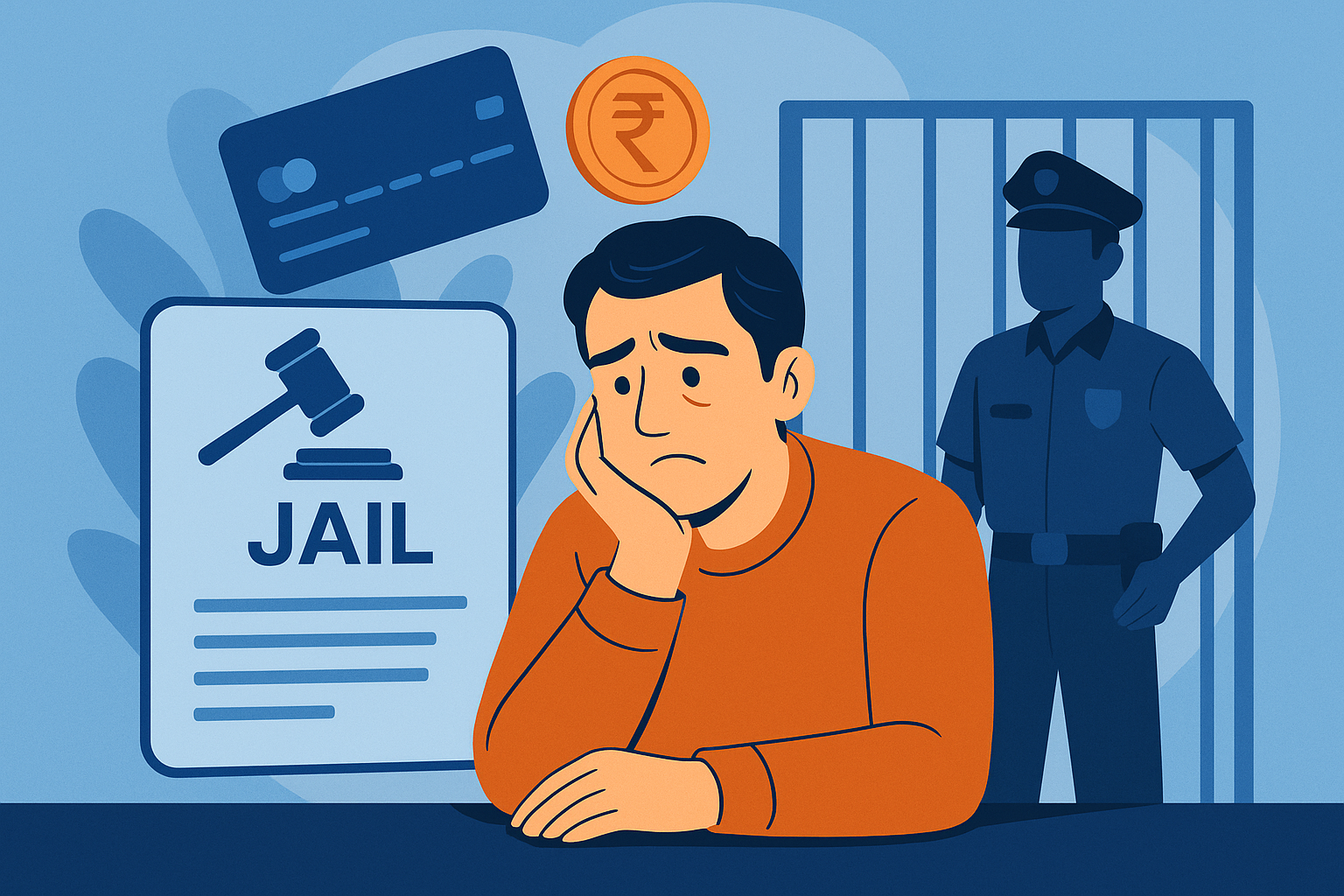
This is one of the most common fears among people struggling with EMIs in India:
“Will I go to jail if I can’t repay my loan?”
The simple answer is No—missing loan payments or credit card dues is a civil matter, not a criminal offence. But still, many people live in constant fear due to threatening calls, legal-looking notices, and misleading agents.
Let’s break down the truth, step-by-step.
Loan Default Is a Civil Issue — Not Criminal
If you’re genuinely unable to pay your EMIs or card dues due to loss of income, job, medical condition, or financial hardship, you cannot be jailed under Indian law.
Your bank or lender may:
Send notices
Add late fees
Report you to credit bureaus
File a civil recovery case in court
But they cannot send police to arrest you.
When Jail Can Actually Happen (In Very Rare Cases)
Although simple non-payment doesn’t lead to jail, there are some legal exceptions:
Cheque Bounce Cases (Section 138, NI Act)
If you give a cheque that bounces, the lender can file a criminal complaint. This can lead to:Fine
Or jail up to 2 years (but usually avoided if paid quickly)
Willful Fraud or Misrepresentation (Section 420 IPC)
If someone takes a loan using fake documents or never intends to repay, that becomes a criminal offence.
But these are rare. For most people with genuine financial problems, jail is NOT a legal consequence.
RBI Guidelines Protect Borrowers from Harassment
Banks and NBFCs are regulated by RBI, which has strict rules:
No abuse, threats, or mental harassment allowed
Recovery agents cannot visit your home late at night
You have a right to ask for all notices in writing
If you feel harassed, you can file a complaint to RBI’s Banking Ombudsman
So Why Do People Still Get Scared?
Because of misleading agents, fraud consultants, and fake legal notices. Many people receive messages or calls saying:
“You will be arrested tomorrow if you don’t pay!”
“Court case has already been filed!”
“Your Aadhaar and PAN will be blocked!”
These are scare tactics. Don’t fall for them.
What Can Banks Legally Do If You Don’t Pay?
Report to Credit Bureaus (CIBIL) — Your score drops
Send Legal Notices — A step before civil recovery
File Civil Suit in Court — Ask for recovery of dues
Court May Allow:
Attachment of salary or property
Freezing of bank account
But this only happens with proper legal process
Still — no arrest happens unless there’s fraud or cheque bounce.
What You Should Do If You Can’t Pay
Don’t ignore bank calls—request a grace period politely
Write to the bank asking for settlement or restructuring
If they harass you, file a complaint with RBI
Never give cheques if you’re unsure you can maintain balance
Avoid illegal agents promising “instant CIBIL fix” or “no repayment escape”
How Lawfully Finance Is Helping Thousands
Thousands of people across India are using Lawfully Finance, one of the country’s most trusted legal debt management programs, to:
Understand their legal rights clearly
Negotiate fair settlements without giving cheques or signing shady deals
Avoid court cases through expert guidance
Improve CIBIL legally without fake methods
Resolve credit card and personal loan pressure — 100% transparent and without any commission cuts
In an environment full of false threats and fraudsters, Lawfully Finance stands out as a fully ethical, law-based debt help system.
Conclusion
If you’re facing EMI pressure or missed payments, remember:
You cannot be jailed just for defaulting on a loan.
India’s legal system protects honest borrowers. With the right help and knowledge, you can fix your situation without fear.
Connect with Lawfully Finance
Lawfully Finance has already helped thousands of borrowers across India — without charging commission and with 100% clarity.
Website Link: https://lawfullyfinance.com
YouTube Link: https://youtube.com/@lawfullyfinance
Instagram Link: https://www.instagram.com/lawfullyfinance
Facebook Link: https://www.facebook.com/profile.php?id=61569797069941