

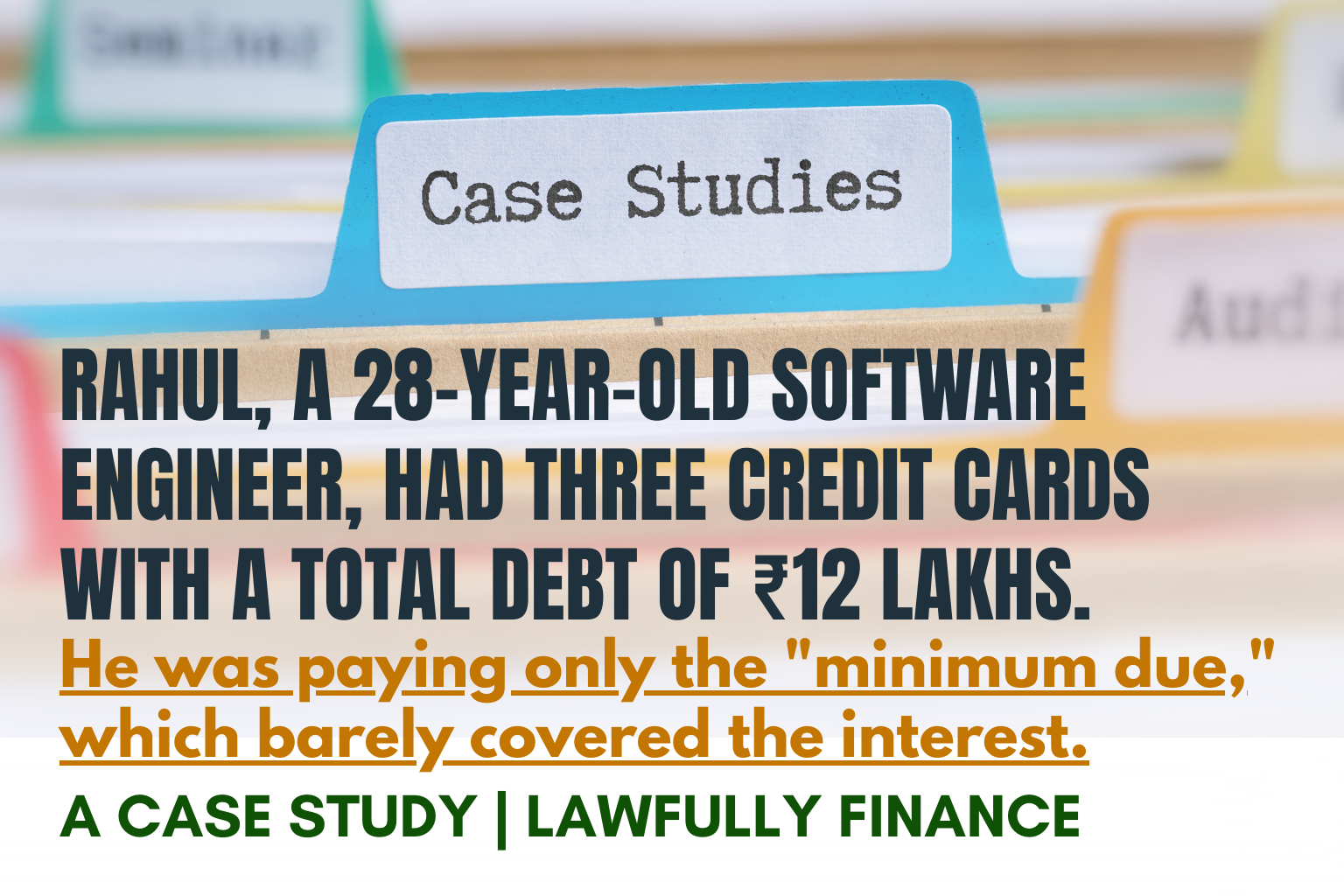
Rahul’s Credit Card Trap: Paying Minimum Due Nearly Cost Him Everything — A Case Study | Lawfully Finance
Rahul, a 28-year-old software engineer working in a reputed IT company, believed he was doing the “right thing” with his finances. With a stable income and career growth ahead, he felt confident handling credit cards. Over time, he ended up with three credit cards carrying a total outstanding of ₹12 lakhs. What worried him wasn’t the amount—but the growing pressure.
Like many young professionals, Rahul chose to pay only the “minimum due” every month. It felt manageable. His cards stayed active, recovery calls didn’t start, and life appeared normal. But quietly, interest was eating his future.
Every month, Rahul paid on time. Yet his outstanding barely reduced. In fact, it kept increasing.
How the Minimum Due Trap Worked Against Rahul
Credit cards typically charge 36–48% annual interest. Rahul didn’t fully understand this. His minimum payments mostly covered:
- Interest charges
- Late fees or GST
- Very little principal
This meant his ₹12 lakh debt stayed almost unchanged despite regular payments.
Soon, Rahul noticed warning signs:
- Salary vanished within days of credit card payments
- No savings despite a good income
- Anxiety whenever statements arrived
- Fear of missing even one payment
He wasn’t irresponsible—he was misinformed.
When Reality Hit Hard
A sudden medical expense forced Rahul to delay one payment. That’s when recovery calls started. The tone was aggressive. Words like “legal action,” “credit damage,” and “court case” were casually used.
Rahul panicked. He borrowed from friends to keep paying minimum dues again—trapping himself deeper.
That’s when he reached out to Lawfully Finance.
The Turning Point: Understanding the Real Problem
The first thing Lawfully Finance helped Rahul understand was simple but shocking:
“Minimum due is not a solution. It’s a slow financial bleed.”
A complete review showed:
- Total dues inflated mainly due to interest
- No realistic way to repay ₹12 lakhs in full
- Continuing minimum payments would cost him years and much more money
Rahul didn’t need more discipline. He needed strategy.

The Lawfully Finance Strategy
Instead of panic payments, Lawfully Finance helped Rahul take structured, lawful action:
- Centralized communication with banks
- Stopped harassment and fear-based calls
- Negotiated settlements on two cards
- Structured closure on the third
- Ensured proper settlement letters and documentation
The result?
Rahul’s ₹12 lakh credit card burden was resolved at a significantly reduced amount, giving him a clear exit timeline instead of endless stress.
Life After Breaking the Minimum Due Cycle
Within months, Rahul felt changes beyond finances:
- No fear when the phone rang
- Better sleep and focus at work
- Confidence restored
- A clear plan to rebuild credit responsibly
He realized an important truth:
Paying minimum due feels safe—but it’s one of the costliest mistakes borrowers make.
Key Lessons from Rahul’s Case
- Minimum due does not reduce debt meaningfully
- Credit card interest grows faster than income
- Panic payments don’t stop harassment
- Early professional guidance saves lakhs
- Settlement is not failure—it’s financial wisdom
Final Thought
Rahul’s story represents thousands of young professionals in India who unknowingly fall into the minimum due trap. Good income does not protect you from bad debt strategy. Knowledge does.
If you’re paying minimum dues and feeling stuck, don’t wait for things to get worse. A timely decision can change everything.
👉 If you’re trapped in credit card debt like Rahul was, take the first step toward clarity with Lawfully Finance:
https://lawfullyfinance.com/step/sign-up/