

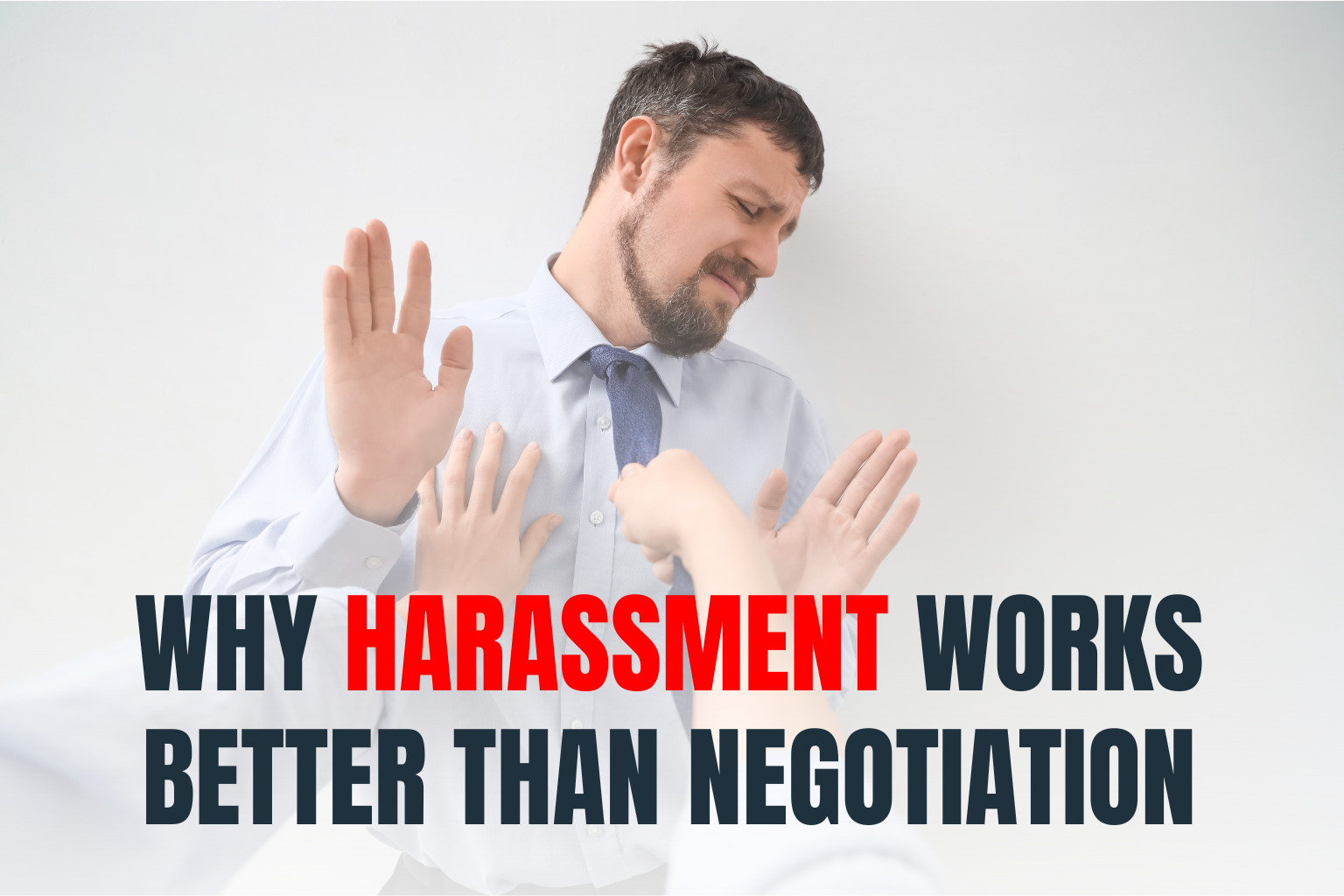
Why Harassment Works Better Than Negotiation | Lawfully Finance
If negotiation is logical and effective, why do some lenders and recovery agents still rely on harassment? The uncomfortable truth is this: harassment works faster than negotiation—especially when borrowers are stressed, uninformed, or fearful. It’s not lawful, and it’s not ethical—but it’s psychologically effective in the short term.
This blog explains why harassment often “works,” how it manipulates borrower behavior, and why informed borrowers can shut it down.
The Psychology Behind Harassment
Harassment bypasses logic and goes straight to emotion. When fear spikes, the brain shifts into survival mode, making people:
- React impulsively
- Seek immediate relief
- Avoid complex decisions
- Comply just to stop the pain
Negotiation requires calm thinking; harassment destroys calm.
Why Negotiation Feels Slower to Lenders
Negotiation involves:
- Assessing financial reality
- Offering structured options
- Waiting for approvals
- Accepting reduced recoveries
Harassment, by contrast, aims for instant compliance—even if it causes long-term damage.
How Harassment Creates Immediate Results
Harassment tactics often include:
- Repeated daily calls
- Aggressive tone and threats
- Fake legal language
- Contacting family or workplace
- Creating artificial deadlines
These tactics trigger urgency and shame, pushing borrowers to pay something quickly.
Why Borrowers Respond to Harassment
Borrowers often comply because:
- They fear escalation
- They misunderstand legal authority
- They want to protect family dignity
- They feel isolated and ashamed
- They believe silence will make it worse
This emotional pressure is exactly what harassment exploits.
Negotiation Requires Knowledge—Harassment Exploits Gaps
Negotiation works best when borrowers understand:
- Their legal rights
- Real consequences vs threats
- Available options (restructuring, settlement)
Harassment succeeds where financial and legal literacy is low.
The Short-Term “Success” vs Long-Term Damage
While harassment may collect quick payments, it causes:
- Panic borrowing (new loans to pay old ones)
- Prolonged minimum-due cycles
- Mental health stress
- Loss of trust in institutions
- Reduced chance of sustainable recovery
It solves today’s pressure while creating tomorrow’s crisis.
Why Harassment Fails Against Informed Borrowers
Harassment loses power when borrowers:
- Stay calm and factual
- Demand written communication
- Document abuse
- Use lawful response scripts
- Seek professional guidance
Confidence neutralizes intimidation.
Red Flags That Harassment Is Replacing Negotiation
Be cautious if:
- You’re threatened instead of offered options
- Calls escalate when you ask questions
- Legal terms are used without documents
- Immediate payment is demanded to “stop action”
- Communication becomes abusive
This isn’t negotiation—it’s coercion.
What Actually Works Better Than Harassment
Sustainable resolution comes from:
- Early, structured negotiation
- Clear financial assessment
- Lawful communication
- Realistic timelines
- Mutually agreed outcomes
It’s slower—but it lasts.
How Lawfully Finance Levels the Field
Lawfully Finance helps borrowers:
- Replace fear with facts
- Stop harassment escalation
- Negotiate lawfully and confidently
- Choose settlement or restructuring wisely
- Restore peace and control
We make negotiation work—without harassment.
Final Thought
Harassment “works” because fear is powerful. But fear creates bad decisions and worse outcomes. Negotiation works when borrowers are informed, supported, and confident.
The moment fear ends, harassment fails.
👉 If harassment is being used to pressure you instead of negotiate fairly, take the first step toward lawful control with Lawfully Finance:
https://lawfullyfinance.com/step/sign-up/