

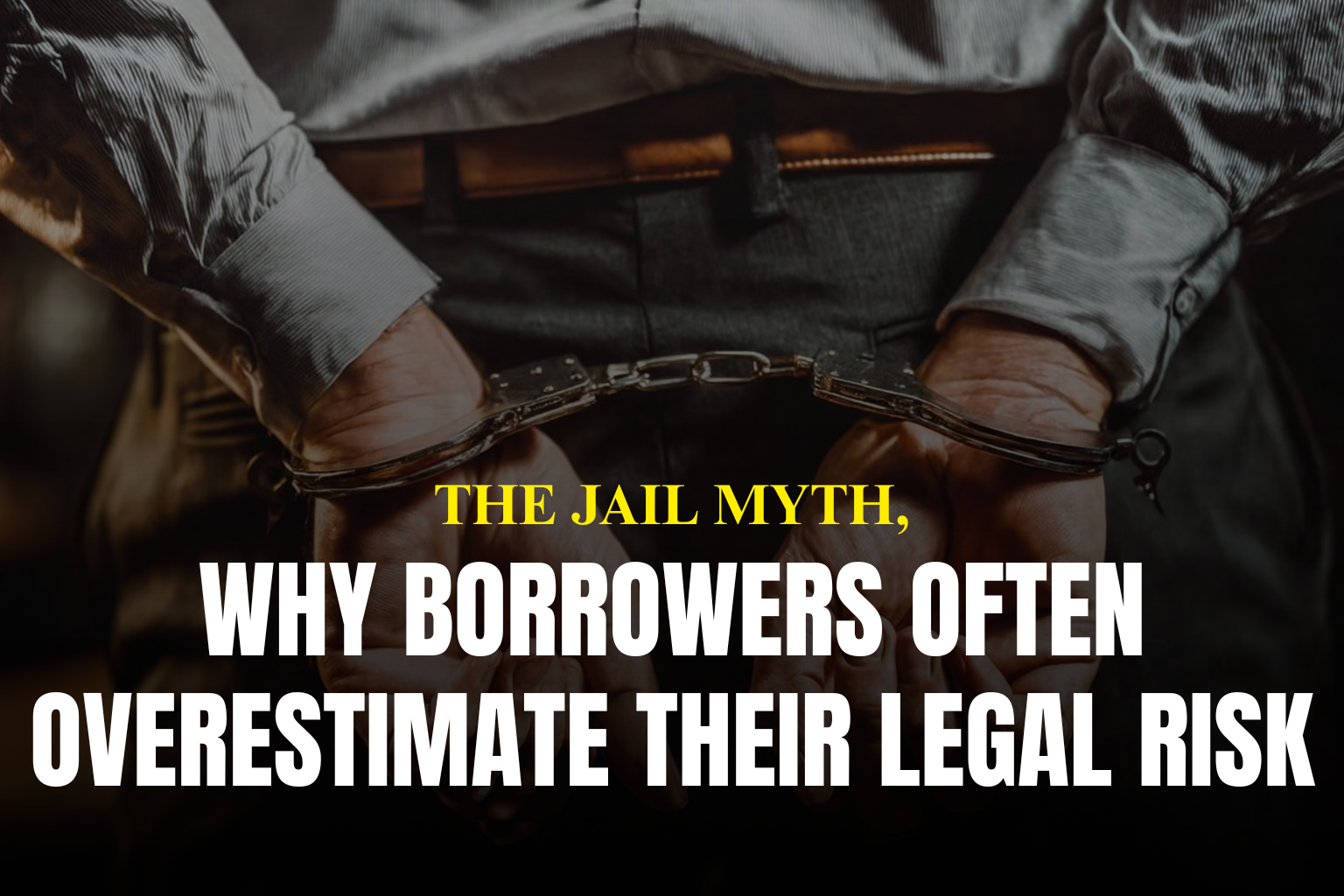
The Jail Myth: Why Borrowers Often Overestimate Their Legal Risk | Lawfully Finance
The moment a borrower hears the words “legal action” or “court case,” the mind often jumps straight to one terrifying image — jail. For many Indians dealing with loan defaults, cheque bounce cases, or credit card dues, the fear of imprisonment feels immediate and unavoidable.
But here’s the truth: most borrowers significantly overestimate their legal risk.
Understanding what is real and what is exaggerated can protect both your mental peace and your financial decisions.
Why Jail Is the First Fear
The fear of jail comes from:
- Aggressive recovery calls
- Legal terminology in notices
- Social stigma around court matters
- Misinformation from friends or internet forums
In India, anything linked to court or police feels criminal — even when it is procedural.
Fear moves faster than law.
Civil Default vs Criminal Offence
Most loan defaults are civil matters, not criminal offences.
If you:
- Miss EMIs
- Default on personal loans
- Delay credit card payments
These are financial breaches, not crimes. Banks may:
- Charge penalties
- Report to credit bureaus
- Initiate recovery proceedings
- File civil suits
But they cannot send you to jail simply because you are unable to pay.
Debt alone is not a crime.
What About Cheque Bounce Cases?
Cheque bounce cases under Section 138 of the Negotiable Instruments Act are often misunderstood.
Yes, they carry legal consequences. But:
- They follow a structured process.
- You receive a notice first.
- You get time to respond.
- They are bailable.
- They are compoundable (can be settled).
Jail is rare and usually linked to repeated non-compliance with court orders, not the initial bounce.
Immediate arrest is a myth.
Why Recovery Agents Mention Jail
Fear is a powerful negotiation tool.
Some recovery agents may say:
- “You will go to jail.”
- “Police complaint will be filed.”
- “Non-bailable offence.”
These statements are often used to create urgency.
Banks and financial institutions operate under regulatory oversight of the Reserve Bank of India, and recovery practices must follow lawful conduct.
Threat language is not the same as legal order.
What Actually Creates Legal Risk
Your risk increases if you:
- Ignore court summons.
- Disobey court directions.
- Avoid legal proceedings repeatedly.
- Commit fraud or intentional deception.
Non-engagement escalates matters — not the debt itself.
The Emotional Cost of the Jail Myth
Believing jail is imminent causes:
- Sleepless nights
- Panic borrowing
- Overpayment under pressure
- Poor negotiation decisions
- Avoidance of lawful help
Fear can damage your life more than the actual legal process.
Why Most Cases End Without Jail
In real practice:
- Most disputes settle.
- Payment plans are arranged.
- Cases close after compliance.
- Courts prefer recovery over punishment.
The system is designed to resolve financial disputes — not criminalize financial difficulty.
Fear vs Legal Reality
Fear says:
“I will be arrested tomorrow.”
Law says:
“There is a defined process with timelines and rights.”
Fear says:
“My life is finished.”
Law says:
“You have procedural protections and options.”
Understanding changes everything.
The Power of Early Action
When borrowers:
- Respond to notices promptly
- Appear in court when required
- Engage in negotiation
- Seek structured guidance
Legal risk drops significantly.
Panic increases exposure. Preparation reduces it.
How Lawfully Finance Helps Reduce Panic
At Lawfully Finance, we help borrowers:
- Understand real legal exposure
- Decode notices calmly
- Separate myths from facts
- Structure settlement strategies
- Restore emotional confidence
We replace fear with clarity.
Final Thought
The jail myth is powerful — but mostly psychological. For most borrowers, financial disputes are civil, procedural, and resolvable.
The biggest danger is not imprisonment.
It is fear-driven decisions made under misinformation.
If legal threats are overwhelming you, pause before reacting.
👉 Get calm, lawful clarity with Lawfully Finance:
https://lawfullyfinance.com/step/sign-up/