

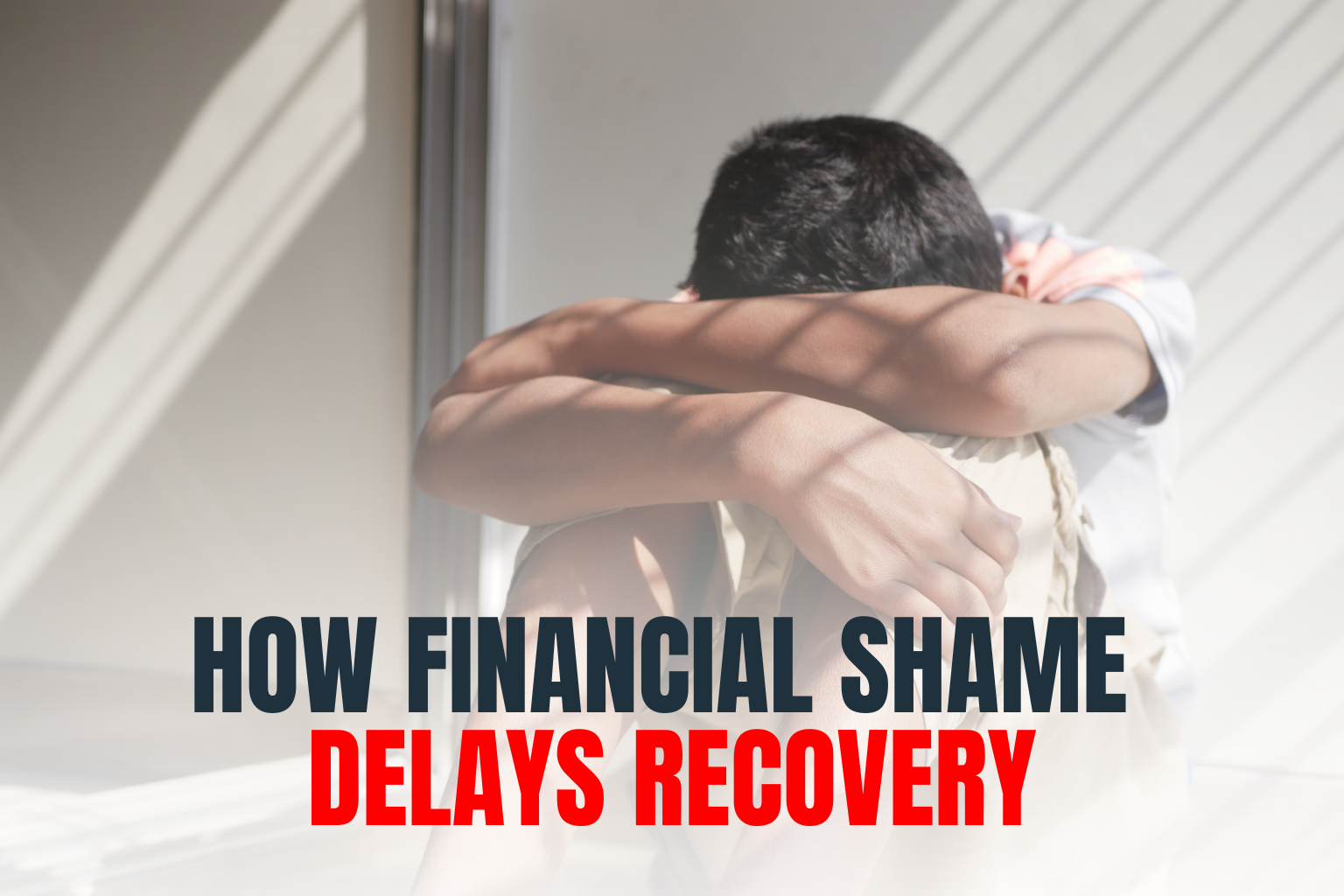
How Financial Shame Delays Recovery | Lawfully Finance
Financial problems don’t become crises only because of money. They become crises because of shame. In India, debt is often treated as a personal failure rather than a life situation. This emotional weight keeps borrowers silent, isolated, and delayed—turning manageable problems into prolonged suffering. Understanding how financial shame delays recovery is crucial to breaking this cycle.
Recovery doesn’t fail because solutions don’t exist.
It fails because shame stops people from reaching them.
What Financial Shame Really Is
Financial shame is the feeling that:
- “I should have known better.”
- “Others will judge me”
- “I’ve failed my family”
- “I don’t deserve help”
It turns a financial issue into a personal identity crisis.
Why Financial Shame Is Strong in India
In Indian society:
- Financial stability is linked to respect
- Being a provider is tied to self-worth
- Struggle is expected to be hidden
- Asking for help feels embarrassing
As a result, borrowers carry guilt silently—even when stress becomes overwhelming.
How Shame Creates Dangerous Silence
When shame takes over, borrowers:
- Avoid talking about debt
- Delay asking for help
- Ignore early warning signs
- Hide notices and calls
- Pretend things are “under control”
This silence gives debt time to grow.
Delayed Action Means Reduced Options
The longer borrowers wait:
- Interest and penalties increase
- Recovery pressure escalates
- Negotiation power weakens
- Stress becomes chronic
- Emotional resilience declines
Shame doesn’t protect reputation—it costs opportunities.
Why Shame Triggers Panic Decisions Later
When pressure finally becomes unbearable, delayed borrowers often:
- Make panic payments
- Accept unfair terms
- Trust unsafe advice
- Borrow again to cover mistakes
Ironically, shame-driven delay leads to more damaging outcomes.
The Emotional Toll of Carrying Shame Alone
Financial shame causes:
- Sleeplessness
- Anxiety
- Irritability
- Loss of confidence
- Emotional withdrawal from loved ones
The burden becomes heavier than the debt itself.
Why Borrowers Blame Themselves Instead of the Situation
Shame makes borrowers think:
- “This happened because I’m careless”
- “Others manage better”
- “I deserve this stress”
In reality, many debt crises are caused by:
- Job loss
- Medical emergencies
- Business slowdown
- Rising living costs
- Aggressive lending
Shame distorts perspective.
How Shame Blocks Clarity
A shame-filled mind:
- Avoids numbers
- Avoids conversations
- Avoids solutions
Clarity requires honesty—and shame makes honesty painful.
What Happens When Shame Is Removed
When borrowers feel safe and understood:
- They speak openly
- Fear reduces
- Decisions improve
- Recovery accelerates
The first relief often comes before financial action—just from being heard.
Why Recovery Begins With Dignity
True recovery requires:
- Respectful conversations
- Judgment-free guidance
- Clear explanation of options
- Emotional reassurance
People recover faster when dignity is preserved.
How Lawfully Finance Helps Borrowers Break the Shame Cycle
At Lawfully Finance, we understand that shame is often the biggest obstacle. We help borrowers:
- Talk openly without judgment
- Understand their situation clearly
- Separate fear from facts
- Learn rights in simple language
- Move forward with confidence and dignity
We replace shame with clarity—and silence with support.
Final Thought
Financial shame doesn’t solve debt.
It delays recovery, increases stress, and deepens isolation.
Debt is a situation—not a character flaw.
And recovery begins the moment shame is replaced with understanding.
👉 If shame has kept you silent, take the first step toward respectful, supportive guidance with Lawfully Finance:
https://lawfullyfinance.com/step/sign-up/