

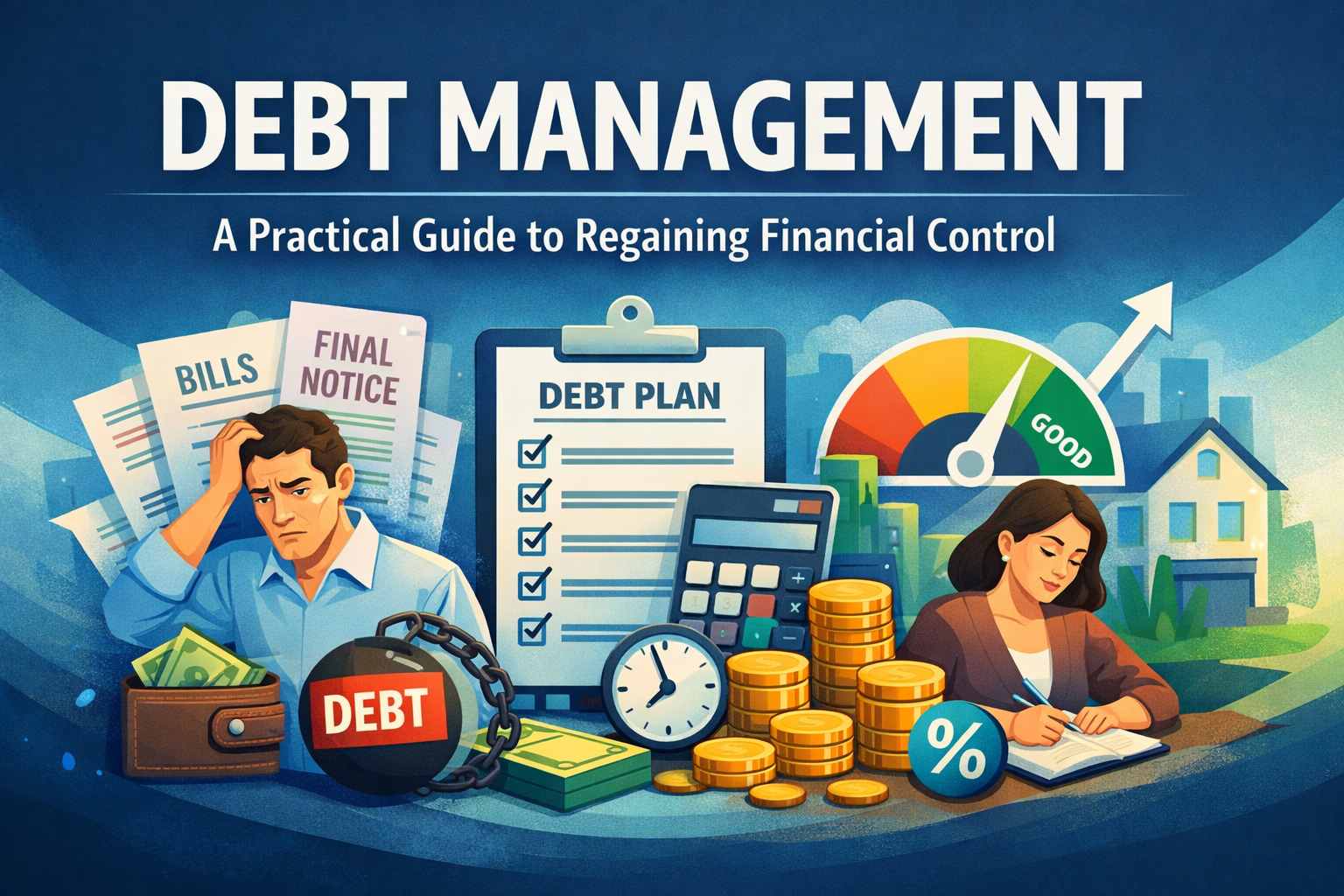
Debt has become a common part of modern financial life. Credit cards, personal loans, education loans, business loans, and EMIs can help individuals and businesses grow—but when unmanaged, they can quickly turn into a source of stress, legal risk, and long-term financial damage. Effective debt management is not about avoiding debt entirely; it is about using it responsibly and maintaining control.
This blog explains what debt management is, why it matters, and how individuals can apply practical strategies to achieve financial stability.
What Is Debt Management?
Debt management is the process of organizing, prioritizing, and repaying debts in a structured and sustainable manner. It involves understanding how much you owe, to whom, at what interest rates, and under what terms—and then creating a plan that aligns repayments with your income and expenses.
Good debt management focuses on:
- Timely repayments
- Interest cost reduction
- Avoiding defaults and penalties
- Protecting credit score
- Maintaining legal and mental peace
Why Debt Management Is Important
Poorly managed debt can lead to missed EMIs, continuous recovery calls, legal notices, and a sharp fall in credit score. Over time, this limits access to future credit and affects career, business, and personal opportunities.
On the other hand, proper debt management helps you:
- Reduce financial stress
- Save money on interest
- Maintain a healthy credit profile
- Plan long-term goals like home ownership, education, or retirement
- Stay compliant with legal and regulatory norms
Common Types of Debt People Struggle With
- Credit card debt: High interest, revolving nature
- Personal loans: Fixed EMIs, often unsecured
- Business loans: Cash-flow dependent, higher risk during downturns
- Education loans: Long tenure, career-linked repayment
- BNPL and app-based loans: Easy access, poor transparency
Each type requires a slightly different management approach, but the fundamentals remain the same.
Key Principles of Effective Debt Management
1. Get Complete Clarity on Your Debt
Start by listing all debts, including:
- Outstanding amount
- Interest rate
- EMI and due date
- Loan tenure
- Lender details
You cannot manage what you do not measure.
2. Prioritize High-Interest Debt
Debts with higher interest rates—especially credit cards—should be addressed first. Reducing these saves significant money over time.
3. Align EMIs With Real Cash Flow
Many people over-commit based on future income assumptions. EMIs should be affordable even during income fluctuations. If EMIs exceed safe limits, restructuring or renegotiation may be required.
4. Avoid New Unnecessary Debt
Taking new loans to pay old loans often worsens the situation unless done through structured refinancing at lower interest rates.
5. Communicate With Lenders Early
If repayment issues arise, proactive communication is critical. Ignoring the problem increases penalties and legal exposure. Early engagement allows for options like rescheduling, moratoriums, or settlements.
The Role of Credit Score in Debt Management
Your credit score reflects how responsibly you handle debt. Late payments, defaults, and settlements can damage it for years. Effective debt management:
- Improves repayment history
- Reduces credit utilization
- Builds lender confidence
A strong credit score lowers future borrowing costs and increases financial flexibility.
Legal and Ethical Aspects of Debt Management
Debt should always be managed through legal and transparent means. Borrowers have rights, and lenders must follow regulated recovery practices. Ethical debt management avoids:
- Harassment or illegal recovery methods
- Unregulated loan apps
- Informal or undocumented settlements
Understanding your rights and obligations is as important as managing numbers.
When to Seek Professional Help
If debt feels overwhelming, professional guidance can help. Indicators include:
- Multiple missed EMIs
- Continuous recovery calls
- Legal notices
- Inability to meet basic expenses
Structured debt advisory services can help with assessment, negotiation, and long-term planning.
Conclusion
Debt is not a failure—it is a financial tool. Problems arise only when it is unmanaged. With discipline, awareness, and the right strategy, debt can be reduced systematically, credit health can be restored, and financial confidence can be rebuilt.
Effective debt management is not about shortcuts or escape—it is about control, compliance, and long-term stability.